



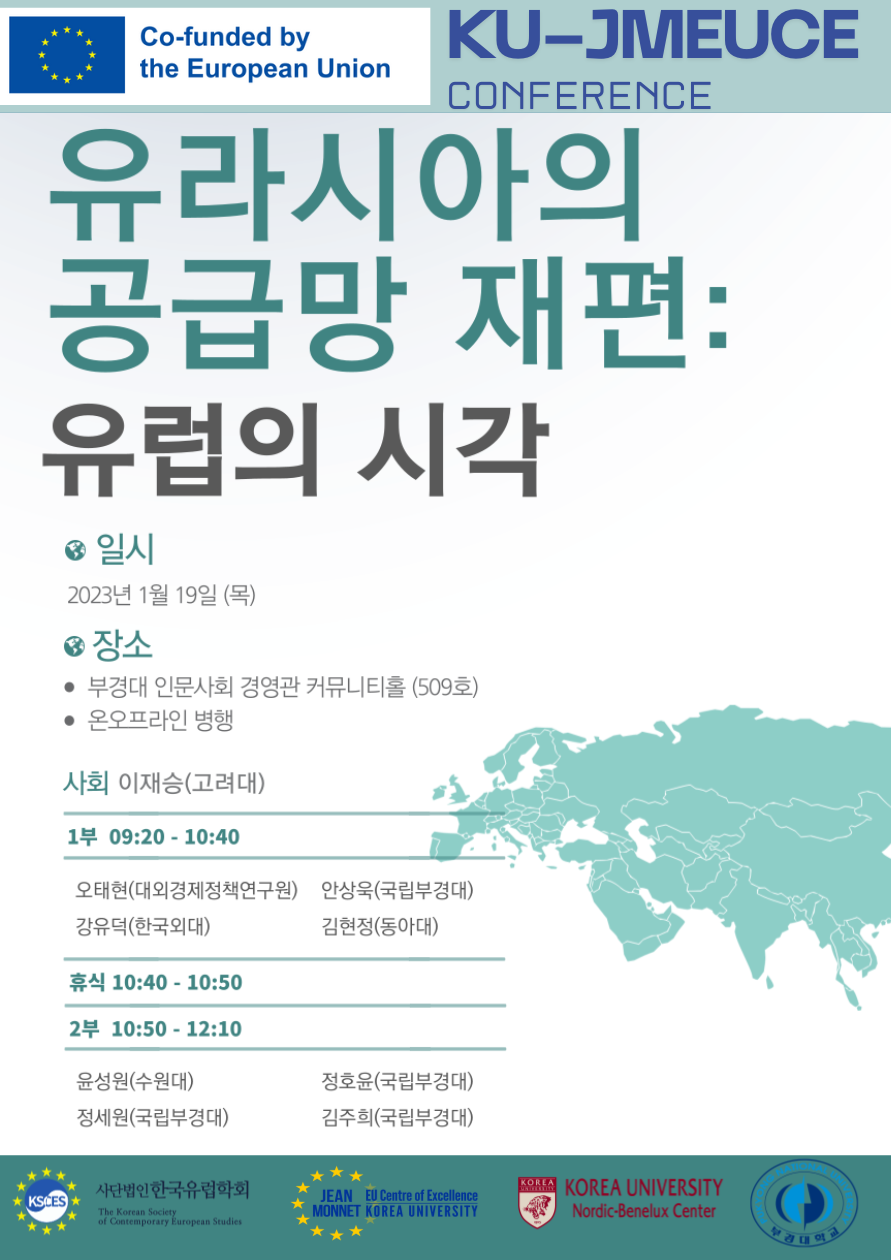
Jan 19, 2023 - Reconfiguration of Eurasian Supply Chains: A European Perspective (Zoom, domestic)
페이지 정보

본문
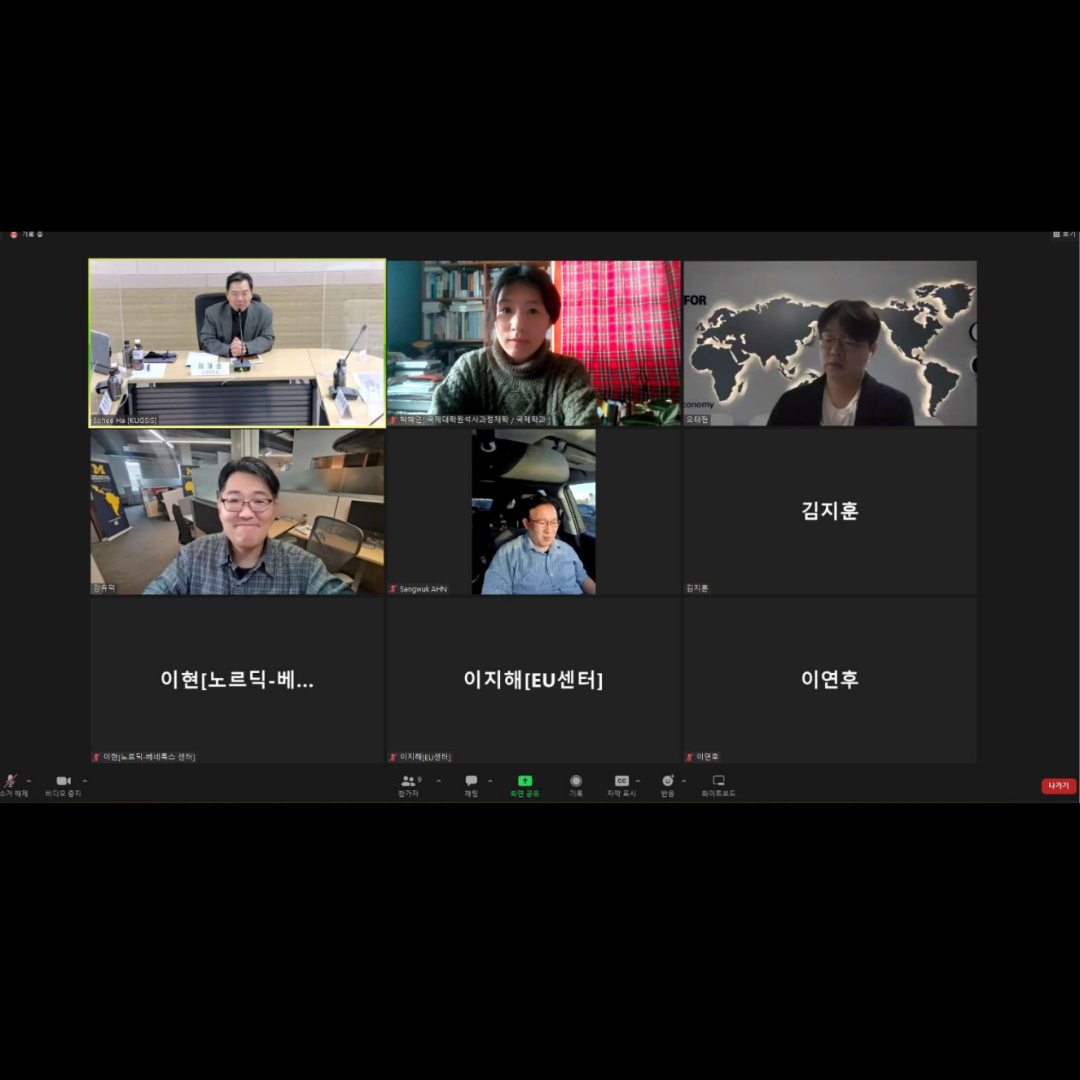
The conference “Reconfiguration of Eurasian Supply Chains: A European Perspective” addressed the restructuring of global value chains (GVCs) amid rising geopolitical tensions. Professor Yoo-duk Kang opened the session by explaining how U.S.–China strategic competition, reversing globalization, and COVID-19 have accelerated supply chain contraction. He emphasized the structural vulnerabilities of GVCs, particularly the existence of “choke points” in sectors such as semiconductors. Professor Kang also highlighted the EU’s deep intra-regional trade integration, noting that over 60% of EU trade occurs within the region. He explained that Central and Eastern Europe has developed as a key manufacturing hub within the EU production network. Building on this, the discussion introduced the EU’s policy shift toward “Open Strategic Autonomy” as a response to growing external risks. The 2021 Trade Policy Review was presented as a turning point, stressing resilience, diversification, and stronger enforcement mechanisms.
Professor Ju-hee Kim focused particularly on the semiconductor sector, linking supply chain insecurity to the pandemic and the Ukraine war. She examined the European Chips initiative, which aims to expand the EU’s share of global semiconductor production to 20% by 2030. Her presentation also analyzed the three pillars of the EU Chips Act: innovation support, state aid for manufacturing, and crisis monitoring mechanisms. In addition, she noted that sustainability and energy efficiency requirements are embedded in the new semiconductor regulations. Professor Ho-yoon Jeong contextualized these developments within broader U.S.–China strategic rivalry and the global race for technological supremacy. He argued that supply chains have increasingly become instruments of economic security and geopolitical competition. The conference also discussed industrial initiatives such as the European Battery Alliance and IPCEI projects to strengthen strategic sectors. Overall, the event concluded that the EU seeks not complete reshoring, but a balanced strategy combining openness, resilience, and strategic capacity building.
첨부파일
-
230119 유라시아의 공급망 재편 Presentation.pdf (8.5M)
5회 다운로드 | DATE : 2026-02-26 17:17:42
- 이전글Jul. 06, 2023: Academic Conference in Germany and Romania (International) 23.07.15
- 다음글Apr. 17, 2025 Sustainability and Global Disruption: Finance and Industry Responses (Domestic) 25.04.20
댓글목록
등록된 댓글이 없습니다.